The radio in the kitchen
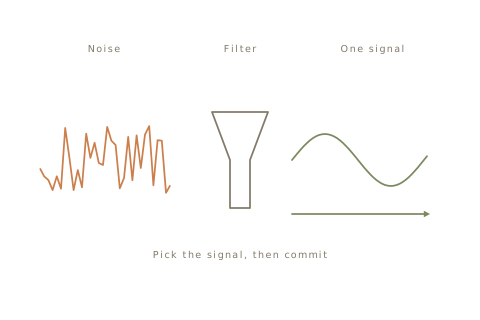
An old radio, slightly off the station, gives you a voice buried in hiss. Turn the dial a little and the hiss drops away. The voice was there the whole time. What changed was the ratio of signal to noise.
Engineers use exactly that phrase, signal-to-noise ratio, for any channel where the real message competes with static. In plain words: how much of what reaches you is the real thing. The original manuscript estimates that in a modern working day the real thing is about five percent. The other ninety-five is hiss.
That number is not a complaint about the world. It is a reason to spend serious effort on the dial.
Power five: telling the difference
The fifth power is the power of discrimination. Not the modern meaning of the word: the older one, meaning the ability to tell things apart. Signal from noise. What matters from what is merely loud.
Here are three questions that act as the dial. Run any incoming demand through them.
- Does this change what I will do in the next week? If not, it is noise, however emotional it feels.
- Is this addressed to me, or just arriving near me? A great deal of outrage is simply weather passing through your feed.
- Would I still care about this in a month? A surprising amount of urgency has a shelf life of one afternoon.
| Arrives as | Usually is | Do |
|---|---|---|
| A headline you feel you must have a view on | Noise | Let it pass. You are not required to have an opinion. |
| A colleague's panic about their deadline | Noise for you, signal for them | Be kind. Do not pick it up. |
| A clear request tied to your one priority | Signal | Act, and act once. |
| A vague sense you should be doing more | Noise dressed as conscience | Return to the priority you already chose. |
Power six: deciding once
Filtering is only half of it. Once you have the signal, you have to move on it, and this is where a second kind of leak opens up: the leak of deciding, then re-deciding, then wondering whether you decided right.
The sixth power is the power of judgement. The original calls it vector resolution, which is the physics term for combining many small pushes into one clean direction. In plain words: decide once, then commit all of yourself to it. Indecision is not caution. It is force split across two directions, which as Chapter 1 showed produces heat and no movement.
The rule is simple to say and hard to keep. Make the decision. Lock it. Execute without carrying the doubt with you. If new data arrives, decide again, cleanly. But do not carry the last decision around as an open question.
One goal at a time
Put the two powers together and you get the practical heart of this chapter. Most people are pursuing ten goals at once and making slow progress on all of them. The book's advice is blunt: at any one time, one goal gets your full weight.
This does not mean the other nine are cancelled. They are queued. There is a difference between a queue and a scatter. A queue moves.
Try this: the one-line day
Tomorrow morning, before any screen, write one line: the single thing that, if it moved forward today, would make the day a success. Put it where you can see it. Every time something arrives, run it through the three questions, and if it is not that line, let it queue. At the end of the day, look at the line. Did it move? That is the only score.
Key takeaways
| Idea | In plain words | What it means for you |
|---|---|---|
| Signal-to-noise | How much of what reaches you is the real thing | About five percent. Spend effort on the dial, not on the hiss. |
| Discrimination | Telling what matters from what is loud | Three questions: Does it change my week? Is it for me? Will it matter in a month? |
| Judgement | Decide once, commit fully | Re-deciding is force in two directions. Lock it and move. |
| One direction | One goal gets your full weight | The rest are queued, not scattered. A queue moves. |
Real-world example
A researcher spends her day reacting to articles, notifications, side-questions, and opportunities. By evening she has touched everything and advanced nothing. This chapter teaches her to ask what is signal, what is noise, and what deserves one-direction force. She chooses one meaningful track for the week and suddenly experiences the power of concentration over constant switching.
What changes in you
- You become more selective about what deserves your mind.
- You stop scattering force across ten competing aims.
- You gain the discipline of deciding once and moving in one direction.
With the signal isolated and the direction chosen, the last two powers are about courage and other people.